Full wedding planning
The whole cycle: from the first meeting to striking the venue. One point of contact — we run the venue, the vendors, the contracts and the timeline; you choose from options.
- Concept and the script of the day
- Venue search and booking
- Vendors, contracts and control
- Decor, florals and printed matter
- On-the-day coordination
- Flights
- The looks: dress, suit and everything around them
- The rings
Everything else is in the estimate — down to team transport, equipment logistics and small inventory rental.
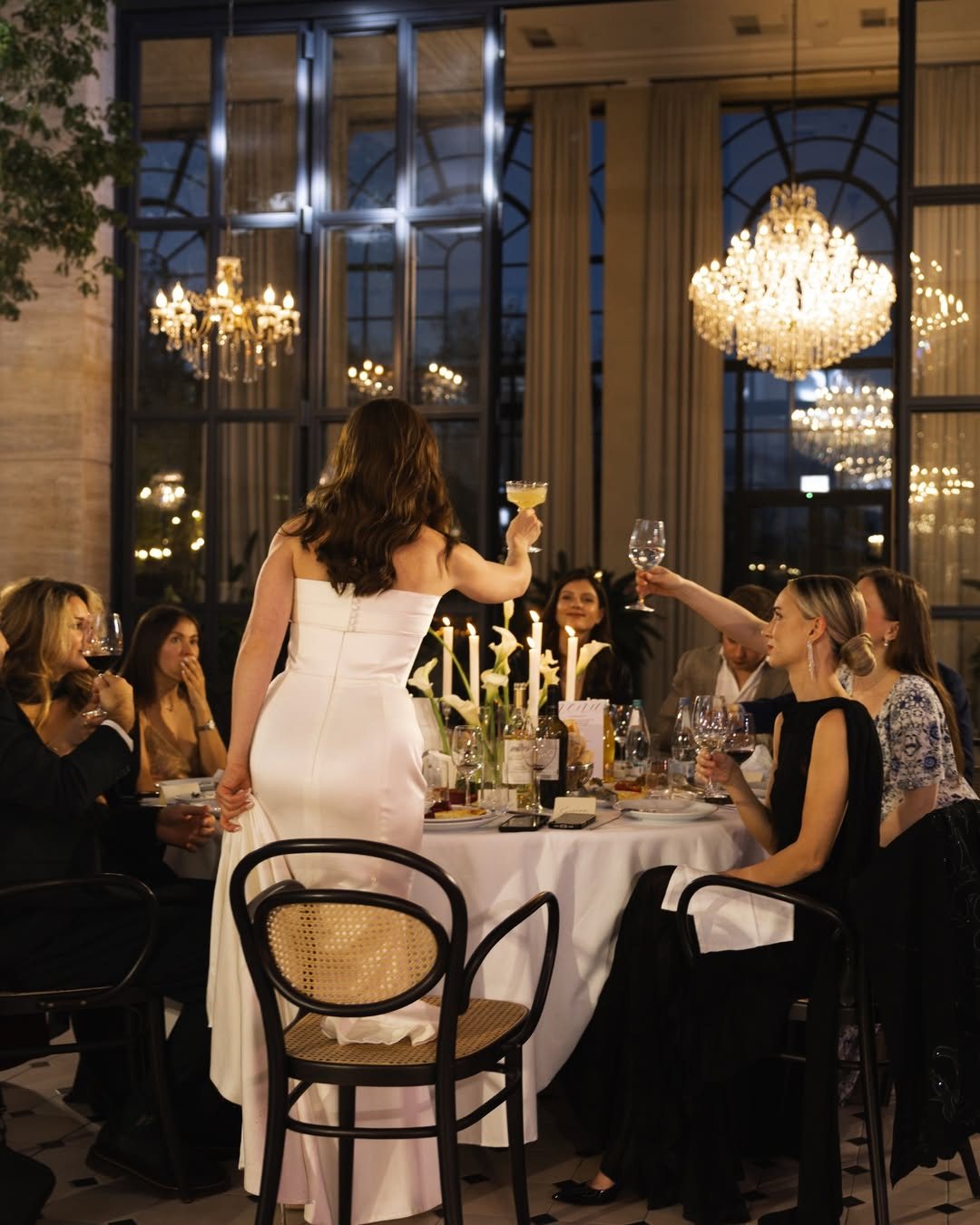 Scale 30–200 guests·Where Tbilisi, Kakheti, Kazbegi, Batumi
A full one-day event rarely costs less than 20–25 thousand dollars — that is not a formal threshold but an honest reflection of what quality planning takes. By region: Tbilisi from $20,000, Kakheti and Kazbegi from $25,000, Batumi on request. Our fee is 12% of the budget and is already included in the estimate.
Answered up front
What full planning includes
Everything — from the first meeting to the last guest leaving the venue. The venue, the vendors, the contracts, the decor, the timeline, the technical side, the logistics, coordination on the day and every negotiation are on us. Your part is to make decisions and enjoy the process.
How the process works
We start with a meeting where we go through the format, a realistic budget and the venue options, so that you have a clear picture. Then we move in stages: venue → timeline → vendors → concept and decor → details → final approvals. At every stage you see what is happening and why.
How far ahead should we start planning
Three to six months is the sweet spot. Earlier is possible, but usually it is extra stress: a year or more of planning wears people out. Later than three months gets harder — the choice of venues narrows, good vendors may have no dates left, and some decisions have to be made faster than you would like.
What the estimate includes
Everything, down to the smallest lines — transport for the team, equipment logistics, small inventory rental. We do not like surprises during the preparation, so the estimate is itemised from the start instead of being built out of vague lines like «decor» and «other». What stays on you is flights, the looks (dress, suit and everything around them) and the rings. Everything else is in the estimate.
What is your fee
12% of the total event budget. It is included in the estimate from the start.
What if something goes wrong on the day
We always have a plan B — for the weather, for force majeure, for a vendor falling through. It is built during the preparation, not invented on the spot: an alternative site in case of rain is mandatory, a backup vendor on the critical positions, a clear script for the team on site. Your job that day is not to solve problems but not to know about them.
Ten questions to ask a planner
We publish this list ourselves — and it is just as honest about us. Ask any planner these questions before you sign. Us included.
What is actually inside your scope?
«Planning» means different things to different people. The list of work must exist on paper before the money, not after.
Who will be with me on the day?
The day needs a person on site, not a chat thread. Ask for a name.
How do you control the budget?
An estimate does not grow by itself. It changes in two cases: your decisions change, or external factors hit — currency, venue terms for your date, force majeure. You are warned about the second kind in advance.
What if I change my mind?
The right answer: every change is agreed with you before it appears in the estimate.
Do you only work with your own vendors?
You can find great vendors on Instagram yourself. The question is who turns their «we will do it» into an obligation.
What do you do if a vendor fails on site?
This tests not a promise but a base of local contacts and the ability to replace someone within the hour.
Who controls the vendors on the day?
Service here is built on hospitality, not on timing. Without hard control a sunset dinner starts in the dark.
What risks do you see in our event specifically?
A planner who names no risks simply has not looked at your task yet.
What is not included?
The most awkward question and the most useful one. Ask it before you sign.
How and how often will we be in touch?
Two months of silence is not «work in progress», it is the absence of a process.
Vague answers now mean specific problems later.
Tell us about your day
The first consultation is free: we go through the format, the venues and the order of numbers — and say honestly if an idea will not work.